




Gold has been valued for centuries because of its rarity, durability, and role in jewellery, trade, and wealth preservation. Today, people continue to buy gold for different reasons, including long-term saving, portfolio diversification, collecting coins, and owning physical assets. However, buying precious metals requires more than checking the latest gold price. Buyers also need to understand purity, weight, premiums, storage, security, and the differences between available products.
For beginners, the process can seem confusing because gold bars, gold coins, silver bullion, and other precious metals each have different features. Prices can change throughout the day, and the final amount paid may be different from the headline market price. Understanding these details can help buyers make more informed decisions and avoid common mistakes.
Whether you are planning your first small purchase or looking to add physical bullion to an existing collection, learning the basics is an important first step. This guide explains how gold and precious metals work, what buyers should compare, how to choose suitable products, and what to consider before making a purchase in the UK.
Why Do People Buy Gold and Other Precious Metals?
Gold remains popular because it combines physical ownership with a long history of use as a store of value. Unlike paper currency, physical gold is a tangible asset that does not depend on a company or government promising to repay a debt. People can own gold in the form of bars, coins, jewellery, and certain collectible items.
One reason people consider gold is diversification. They may want to hold different types of assets instead of keeping all their savings in cash, property, or financial investments. Precious metals can behave differently from other assets under certain economic conditions, although their prices can also fall and remain unpredictable.
Some buyers prefer physical metals because they can hold and store them directly. Others enjoy collecting coins with historical significance or designs connected to particular countries. Silver also attracts buyers because it is generally less expensive per unit than gold and is used in jewellery, electronics, solar technology, and other industries.
However, precious metals are not guaranteed to produce a profit. Gold and silver prices fluctuate, and investors may receive less than they paid when selling. Storage, insurance, transaction costs, and the difference between buying and selling prices can also affect the overall result.
Before purchasing any metal, consider why you want to own it, how long you expect to hold it, and how much money you can comfortably commit. A clear purpose makes it easier to choose the right product and understand the risks.
How Should Beginners Choose Between Gold Bars and Gold Coins?
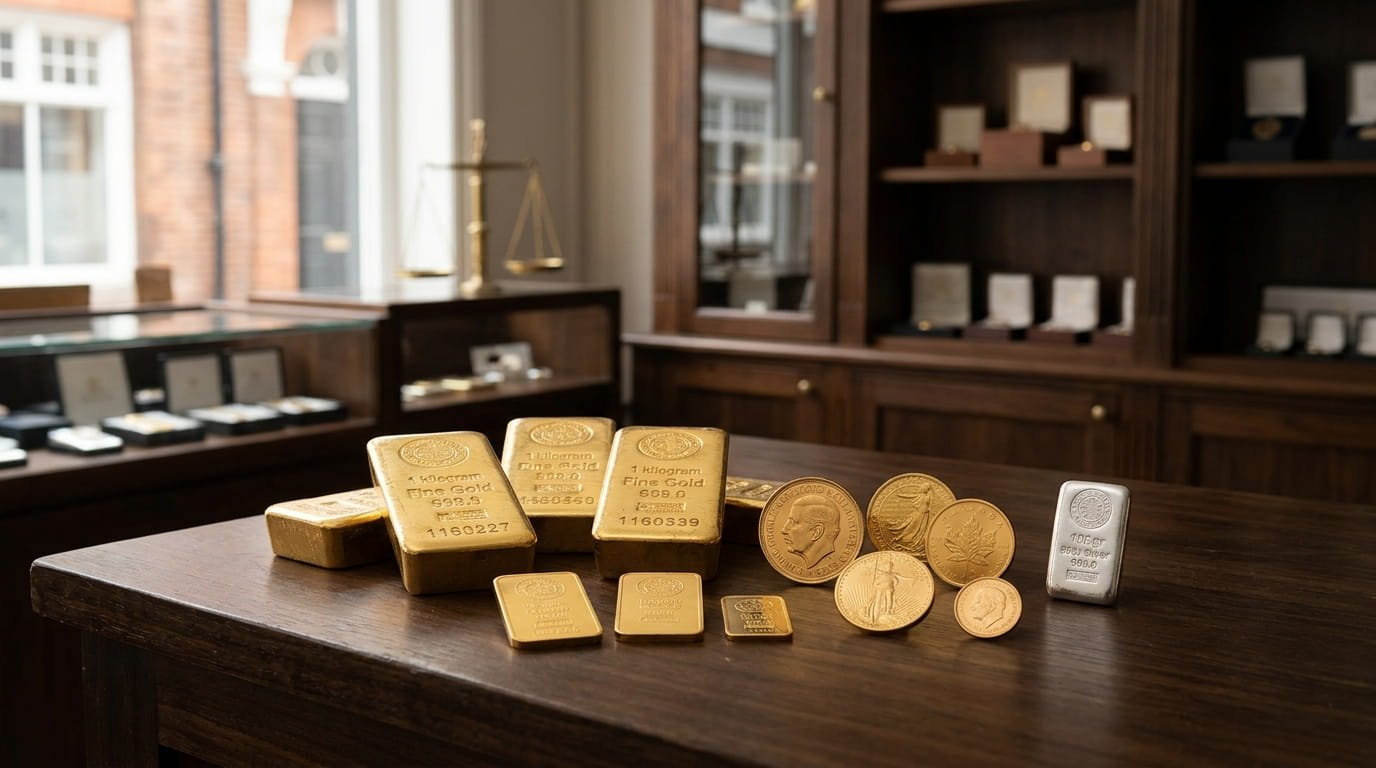
Gold bars and gold coins are two common choices for people interested in physical bullion. Both can contain investment-grade gold, but they offer different advantages depending on a buyer’s budget, preferences, and future selling plans.
Gold bars are often attractive to buyers who want to focus on the amount of gold they receive for their money. They are available in several weights, from small one-gram bars to larger formats. Larger bars may have lower premiums per gram, although they require a higher initial payment and may be less convenient to sell in small portions.
Gold coins can offer greater flexibility. Recognised bullion coins are produced by established mints and are available in different sizes. Some buyers prefer coins because they are familiar with widely traded designs and may find it easier to sell individual pieces rather than part of a larger holding.
The right choice depends on more than appearance. Buyers should compare the gold content, purity, premium, product condition, and potential resale market. A beautifully designed coin is not automatically a better investment than a bar, and a larger bar is not necessarily the best option for everyone.
It is also important to distinguish bullion coins from collectible or numismatic coins. Bullion coins are generally valued mainly for their precious metal content, while collectible coins may carry extra value because of rarity, age, condition, or collector demand. That additional value can be difficult to assess without specialist knowledge.
Beginners should start by comparing products from reputable dealers and understanding the total cost of each option. Choosing a product that fits the budget and can be resold through an established market is usually more practical than buying something simply because it looks appealing.
What Should You Know About Gold Purity, Weight, and Hallmarks?
Purity is one of the most important factors when comparing gold products. It indicates how much of an item consists of gold rather than other metals. Pure gold is commonly described as 24 carat, while lower-carat gold contains a mixture of gold and other metals.
For example, 18-carat gold contains 75% gold, while 9-carat gold contains 37.5% gold. These differences matter when calculating the metal value of jewellery or other gold items. Two pieces of the same weight may have different values because their gold content is different.
Investment bullion bars are often sold with stated purity levels such as 999.9 fine gold. This means the product contains 999.9 parts gold per thousand. Silver bullion may also be offered in high-purity forms, including 999 fine silver.
Weight is equally important. Gold is commonly quoted by gram or troy ounce in precious metal markets. A standard troy ounce is approximately 31.1035 grams, which differs from the ordinary avoirdupois ounce used for many everyday goods.
When comparing products, make sure you are comparing the same unit of measurement and similar purity levels. Otherwise, a price comparison can be misleading. A lower-priced product might contain less gold or have a different weight.
Hallmarks, packaging, serial numbers, and manufacturer information can provide useful details about a product. However, their presence alone should not replace buying from a reputable dealer. For valuable purchases, product documentation and appropriate authenticity checks can provide additional reassurance.
Understanding these basics helps buyers evaluate products more accurately. It is especially useful when comparing investment bullion with jewellery, inherited items, or gold purchased from unfamiliar sellers.
How Do Gold Spot Prices and Dealer Premiums Work?
The spot price represents the current market price used as a reference for trading a precious metal. Gold and silver spot prices move in response to factors such as supply and demand, economic expectations, interest rates, currency movements, and geopolitical uncertainty.
However, the spot price is not always the amount a customer pays for a physical product. Retail bullion prices normally include a premium that reflects additional costs associated with producing, distributing, stocking, and selling the item. The size of this premium can vary by product, weight, demand, and dealer.
For example, a small gold bar may have a higher premium per gram than a larger bar. This can happen because manufacturing, packaging, handling, and distribution costs represent a larger proportion of the smaller product’s price. Larger bars may offer better value per gram but require more money upfront.
Coins can also carry premiums that differ from those of bars. Recognised designs, manufacturing costs, demand, and availability may affect the final price. Buyers should therefore avoid assuming that every product containing the same amount of gold will have the same retail price.
A useful comparison includes the spot price, the product’s weight and purity, the premium, delivery charges, and any payment-related fees. Looking only at a headline price may leave out costs that affect the final purchase.
Live pricing tools can help buyers understand how market movements influence the value of precious metals. However, displayed prices can change quickly, so the amount confirmed during the purchase process is particularly important.
Take time to compare the full cost of similar products before making a decision. Transparent pricing makes it easier to understand what you are paying for and whether the product fits your budget.
Where Can You Buy Gold and Precious Metals Safely in the UK?
Choosing a reliable seller is an important part of purchasing physical bullion. Buyers should look for clear product descriptions, stated weights and purity levels, transparent prices, secure payment arrangements, and understandable delivery or collection policies.
An established dealer should provide enough information for customers to compare products before paying. This includes details about the metal, the product format, the total cost, and the arrangements for receiving the purchase. Customers should also know how to contact the business if they have questions about an order.
Online shopping can make it easier to compare different gold bars, bullion coins, and silver products. It allows buyers to review product information and current prices without travelling to a physical shop. Nevertheless, customers should check the website address, business details, payment security, and terms before placing an order.
For buyers researching physical bullion, the London Gold Centre online shop provides a place to explore gold bars, gold coins, silver bullion, and other precious metal products. Buyers can review the available options and compare product details before deciding what suits their needs.
Some people prefer to visit a dealer in person, particularly when making a significant purchase or seeking help understanding different bullion formats. A physical location may allow customers to ask questions and arrange collection, depending on the dealer’s procedures.
Whichever purchasing method you choose, do not rely on promotional claims alone. Check the complete terms, confirm what is included in the price, and make sure you understand the delivery, collection, and return arrangements where applicable.
Buying from a reputable source cannot eliminate market risk, but careful research can help reduce avoidable problems associated with unclear product descriptions, questionable authenticity, or unreliable sellers.