



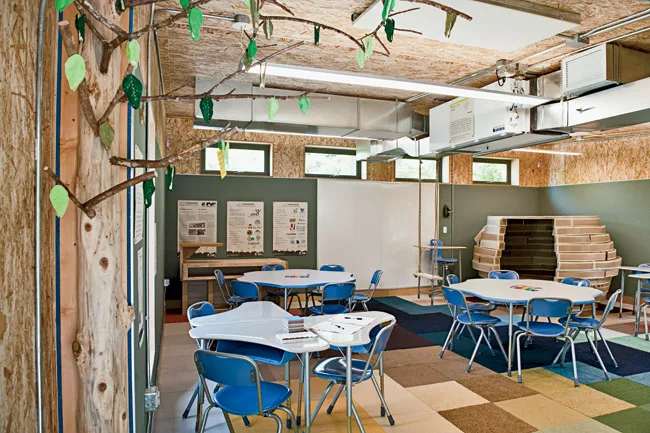

Creating a productive classroom involves making several adjustments, including desk arrangement, storage access, technology integration, and lighting. Portable classrooms can be designed around these practical factors; this helps schools build learning environments that reflect how students and teachers use the space. Here are some ways to foster a productive environment in a modular classroom:
Start With Classroom Basics
When creating a productive space in portable classrooms, start by evaluating the room’s primary purpose. Spaces intended for traditional lessons may require different arrangements than those needed for hands-on training or group projects. Modular labs are also designed differently; this helps accommodate proper ventilation, utilities, and safety features.
Defining the classroom’s primary use provides a basis for deciding on the right modular building size for the school. Factors to assess include how much open space is required, the number and arrangement of seating, the available work surface, and the amount of storage space needed. Schools can choose from different portable classroom floor plans; each one offers a specific number of individual rooms. Options include:
- Two-pack floor plan
- Four-pack floor plan
- Six-pack floor plan
- Eight-pack floor plan
- Ten-pack floor plan
Administrators should also evaluate accessibility during this stage. This includes incorporating ramps and accessible bathrooms; wide doorways are another helpful feature for modular classrooms. Planning these elements at the start allows the classroom to accommodate the different needs of the students and teachers while maintaining usable instructional space.
Use Space Efficiently
A productive classroom needs enough interior space to accommodate the movement of both teachers and students. Furniture such as desks and lockers should fit seamlessly in designated places; this helps keep the entire space organized. It allows everyone to remain comfortable without reducing usable instructional space or restricting circulation.
Modular building providers can configure the classrooms to accommodate different furnishings and activities. They offer customized floor plans, and they design the units according to the school’s spatial preferences, allowing the layout to support the intended use. This helps providers deliver and install a modular building that remains functional throughout the school calendar.
Flexible classroom layouts support different learning arrangements, from traditional teaching to open-learning instruction. Teachers have more options when organizing instruction because the space can be reconfigured to suit the specific needs of different lessons and activities. The school benefits from a modular classroom that adapts to the lesson rather than requiring the same arrangement for every activity.
Incorporate Adequate Storage
Schools should evaluate storage needs when planning classrooms because insufficient storage causes teaching supplies to compete with instructional space. Educators can benefit from functional cabinets and dedicated storage areas with enough capacity to organize materials. They should not have to use desks, walkways, and other classroom areas to store learning supplies. Some cabinets and storage areas can be integrated into the design of the portable classroom. Schools work with providers to add the cabinets and storage spaces needed. With adequate storage in place, the space can stay cleaner and more organized; this helps maximize student use.
Make the Space Comfortable
Teachers and students spend a significant amount of time inside classrooms, so administrations should make comfort a key part of room planning. Modular building providers can incorporate HVAC systems and technology features into the design. Taking this approach from the start provides systems that complement the classroom’s layout, teaching methods, and available infrastructure.
Custom classroom designs can include technology such as:
- Interactive displays
- Smart boards
- Wi-Fi
- Audiovisual systems
- Ethernet connectivity
Planning these elements and integrating them into the design of the modular building may reduce conflicts between student work areas and furniture. Educators also gain more space for digital learning, presentations, and other technology-supported activities. Modular building providers incorporate HVAC systems for temperature control to keep learners and teachers comfortable for longer periods. They can also provide interior finishes, such as elevated ceilings, textured walls, and carpeting, to address issues like noise levels. These details enhance the classroom’s physical environment; they help provide a safe space for faculty and students.
Design Custom Portable Classrooms
Schools should evaluate their educational needs when designing portable classrooms, as this helps create functional spaces. Layout, storage, comfort, and accessibility should work together to provide a learning environment that supports everyday teaching while accommodating changing educational activities. Consult a modular building provider today to develop a layout that adapts to your needs.