



Starting or growing a clothing brand involves much more than creating attractive designs. The quality of your products, consistency of production, fabric selection, sizing, finishing, and quality control all influence how customers perceive your brand. One of the most important decisions is therefore choosing the right manufacturing partner.
- What Does a Clothing Manufacturer Do?
- Why the Right Manufacturer Matters
- Start With a Clear Product Specification
- Always Request a Sample Before Bulk Production
- Evaluate Fabric and Material Quality
- Understand Minimum Order Quantities
- Pay Attention to Printing and Customization
- Create a Strong Quality-Control Process
- Common Garment Defects to Watch For
- Communication Can Prevent Production Problems
- Consider Production Lead Times
- Do Not Choose Based on Price Alone
- Build a Long-Term Manufacturing Relationship
- Conclusion
Reliable clothing manufacturers can help brands transform ideas into finished garments while maintaining consistent production standards. Whether you are launching a new fashion label or expanding an existing product range, understanding the manufacturing process can help you avoid costly mistakes.
What Does a Clothing Manufacturer Do?
A clothing manufacturer turns a brand’s designs and specifications into finished garments. Depending on the manufacturer and type of order, the production process may include fabric sourcing, pattern development, sampling, cutting, sewing, printing, embroidery, finishing, inspection, and packaging.
Some manufacturers provide only specific production services, while others offer end-to-end support. For emerging brands, working with a manufacturer that can handle several stages of production may simplify communication and reduce the need to coordinate with multiple suppliers.
Before choosing a supplier, brands should clearly define their requirements, including garment type, fabric, measurements, colors, customization methods, order quantity, packaging, and expected delivery schedule.
Why the Right Manufacturer Matters
A manufacturer directly affects the quality and consistency of your clothing. Even an excellent design can lead to disappointing results if stitching, measurements, fabric quality, or finishing are inconsistent.
A suitable manufacturing partner should be able to understand your technical requirements and reproduce them accurately across larger production runs. Communication is equally important. Brands often need to discuss samples, revisions, materials, sizing, and production schedules before approving a bulk order.
Price should therefore not be the only factor when comparing manufacturers. Production capability, quality-control procedures, customization options, communication, lead times, and experience with similar garments should also influence the decision.
Start With a Clear Product Specification
Before contacting a manufacturer, prepare detailed product specifications. The more information you provide, the easier it becomes for the supplier to understand what you want.
Specifications can include fabric composition and weight, garment measurements, stitching requirements, color references, artwork placement, labels, trims, packaging, and finishing details.
For example, a brand producing oversized t shirts should define more than just the graphic or color. Details such as shoulder width, body length, sleeve length, neckline construction, fabric weight, fit, printing method, and wash requirements can significantly affect the finished product.
Clear specifications also make samples easier to evaluate because both the brand and manufacturer have an agreed reference point.
Always Request a Sample Before Bulk Production
Sampling is one of the most valuable stages of garment manufacturing. A sample gives you an opportunity to examine the actual product before committing to a larger production run.
When reviewing a sample, check its measurements against your specifications. Examine the fabric’s appearance and feel, stitching consistency, seams, labels, prints or embroidery, and overall construction.
Try to evaluate the garment after washing as well. Some fabrics may shrink, twist, fade, or change texture after laundering. Identifying these problems during sampling gives you an opportunity to make adjustments before bulk production begins.
If revisions are required, document them clearly and confirm the final approved sample before authorizing production.
Evaluate Fabric and Material Quality
Fabric plays a major role in garment performance. Two garments with similar designs can feel completely different depending on the material used.
When evaluating fabrics, consider composition, weight, stretch, softness, durability, shrinkage, colorfastness, and intended use. A lightweight fabric may work well for one clothing category but may not provide the structure required for another.
Brands should also clarify whether the manufacturer will source the fabric or whether the material needs to be supplied separately. If the manufacturer handles sourcing, request fabric samples or swatches before approving the final material.
Accessories such as zippers, buttons, drawstrings, labels, and elastic should receive similar attention because small components can influence both functionality and customer perception.
Understand Minimum Order Quantities
Minimum order quantity, commonly called MOQ, is another important consideration. Manufacturers establish MOQs based on production efficiency, fabric purchasing requirements, customization, and setup costs.
Smaller brands may prefer lower MOQs because they reduce inventory risk. Larger brands, however, may prioritize manufacturers capable of producing substantial quantities consistently.
Before confirming an order, understand whether the MOQ applies per design, color, size, or total order. This distinction can significantly affect the actual number of units you need to purchase.
It is also useful to discuss whether the manufacturer can scale production if demand increases in the future.
Pay Attention to Printing and Customization
Customization helps differentiate a clothing brand from generic products. Depending on the garment, customization can include screen printing, embroidery, heat transfer, direct-to-garment printing, custom labels, woven patches, special washes, and unique packaging.
Each method has different advantages and limitations. The best option depends on the fabric, design complexity, quantity, desired appearance, and budget.
Before production, ask for samples of customized elements whenever possible. Colors displayed on a computer screen may not appear exactly the same on fabric, while embroidery and printing can behave differently depending on the material.
Create a Strong Quality-Control Process
Quality control should not begin after production is complete. Ideally, quality expectations should be established before manufacturing starts and monitored throughout production.
Brands should define acceptable tolerances for measurements, stitching, colors, prints, labels, and other important details. A structured inspection process makes it easier to identify defects consistently rather than relying only on visual impressions.
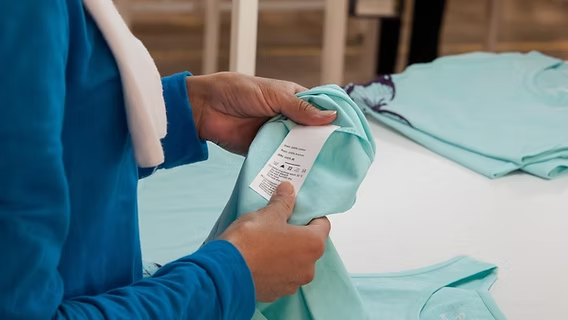
Using a detailed Garment Inspection list can help organize the inspection process and ensure important areas are not overlooked. Depending on the garment, checks may cover measurements, seams, stitching, fabric defects, color consistency, labels, accessories, printing, finishing, and packaging.
Common Garment Defects to Watch For
Garment defects can appear at different stages of manufacturing. Some are immediately visible, while others become noticeable only when the garment is worn or washed.
Common issues include uneven stitching, skipped stitches, loose threads, incorrect measurements, fabric stains, holes, inconsistent colors, misaligned prints, damaged accessories, incorrect labels, and poor finishing.
Measurement differences are particularly important for garments sold online. Customers expect the product they receive to correspond closely with the published size chart. Significant inconsistencies can lead to returns and negative customer experiences.
For this reason, brands should establish measurement tolerances and inspect representative units from production.
Communication Can Prevent Production Problems
Clear communication between the brand and manufacturer can prevent many avoidable mistakes. Important decisions should be documented rather than relying solely on informal conversations.
Keep records of approved measurements, fabrics, colors, artwork, labels, samples, quantities, packaging instructions, and delivery expectations. When revisions are made, clearly identify which version is final.
Photos, diagrams, technical drawings, and measurement charts can also reduce misunderstandings, especially when describing garment construction or artwork placement.
Consider Production Lead Times
Production planning is particularly important for seasonal collections, launches, and promotional campaigns. Manufacturing involves several stages, and delays at one stage can affect the entire schedule.
Ask the manufacturer about expected timelines for sampling, material sourcing, bulk production, inspection, packaging, and shipping. Build additional time into your schedule for possible revisions or unexpected delays.
Brands placing repeat orders should also discuss how lead times may change during busy manufacturing periods.
Do Not Choose Based on Price Alone
Low production costs can be attractive, especially for new clothing businesses. However, the cheapest quotation does not necessarily provide the best overall value.
Poor-quality production can result in defective inventory, customer returns, replacements, delayed launches, and damage to brand reputation. These costs can outweigh the initial savings from choosing a cheaper supplier.
Instead, compare manufacturers based on total value. Consider quality, reliability, communication, production capabilities, customization, lead times, inspection standards, and pricing together.
Build a Long-Term Manufacturing Relationship
Once you find a manufacturer that consistently meets your expectations, developing a long-term relationship can make future production easier.
Repeat cooperation allows the manufacturer to become familiar with your sizing, materials, quality expectations, packaging, and preferred production methods. It can also simplify repeat orders and new product development.
At the same time, brands should continue documenting specifications and inspecting production. A strong relationship works best when expectations remain clear and measurable.
Conclusion
Successful clothing production depends on preparation, communication, manufacturing capability, and consistent quality control. Brands should carefully evaluate potential suppliers, provide detailed specifications, approve samples, inspect materials, understand production timelines, and establish clear quality standards before placing large orders.
The goal is not simply to find a factory capable of producing garments. It is to build a production process that delivers consistent products that match your brand’s expectations.
By combining the right manufacturing partner with careful sampling and structured garment inspection, clothing brands can reduce production risks, maintain better consistency, and create products customers are more likely to trust and purchase again.